top of page
Adoption Information. A smiling couple holding two guinea pigs outdoors, introducing information to consider before adopting from Miss Piggy’s Lair.

Bringing a guinea pig into your home is a wonderful experience.

They're gentle, funny and FULL of personality, but they're also a BIG commitment.

Before you apply to adopt, please take time to learn about their needs and decide

if guinea pigs are the right fit for your home and lifestyle.


Our goal is to find safe, loving and permanent homes where our piggies can truly thrive.

Companionship: Guinea pigs are social animals and generally do best with another compatible guinea pig. Miss Piggy’s Lair often rehomes guinea pigs in pairs or with a compatible friend.
Home and housing: Guinea pigs need plenty of room to run, explore and have space from each other. A good minimum size for a pair is 2 metres by 0.5 metres with a solid floor, plus hides, tunnels, bedding, food and enrichment.
Diet and nutrition: Guinea pigs need unlimited grass hay, fresh leafy greens and vegetables, a small amount of quality pellets, fresh clean water and Vitamin C. Avoid foods that are unsafe for guinea pigs.
Indoors is best: Miss Piggy’s Lair strongly encourages guinea pigs to live indoors. Queensland weather can be too hot and guinea pigs can be vulnerable to predators, insects and extreme weather. Indoor housing also makes their health easier to monitor.
Male and female guinea pigs should not be housed together unless they have been desexed. Guinea pigs can reproduce young and accidental pregnancies can cause serious health risks.
Cleaning and maintenance: Guinea pigs poop a lot. Their enclosure needs daily spot cleaning and a full clean several times a week to keep them healthy, happy and their home clean.
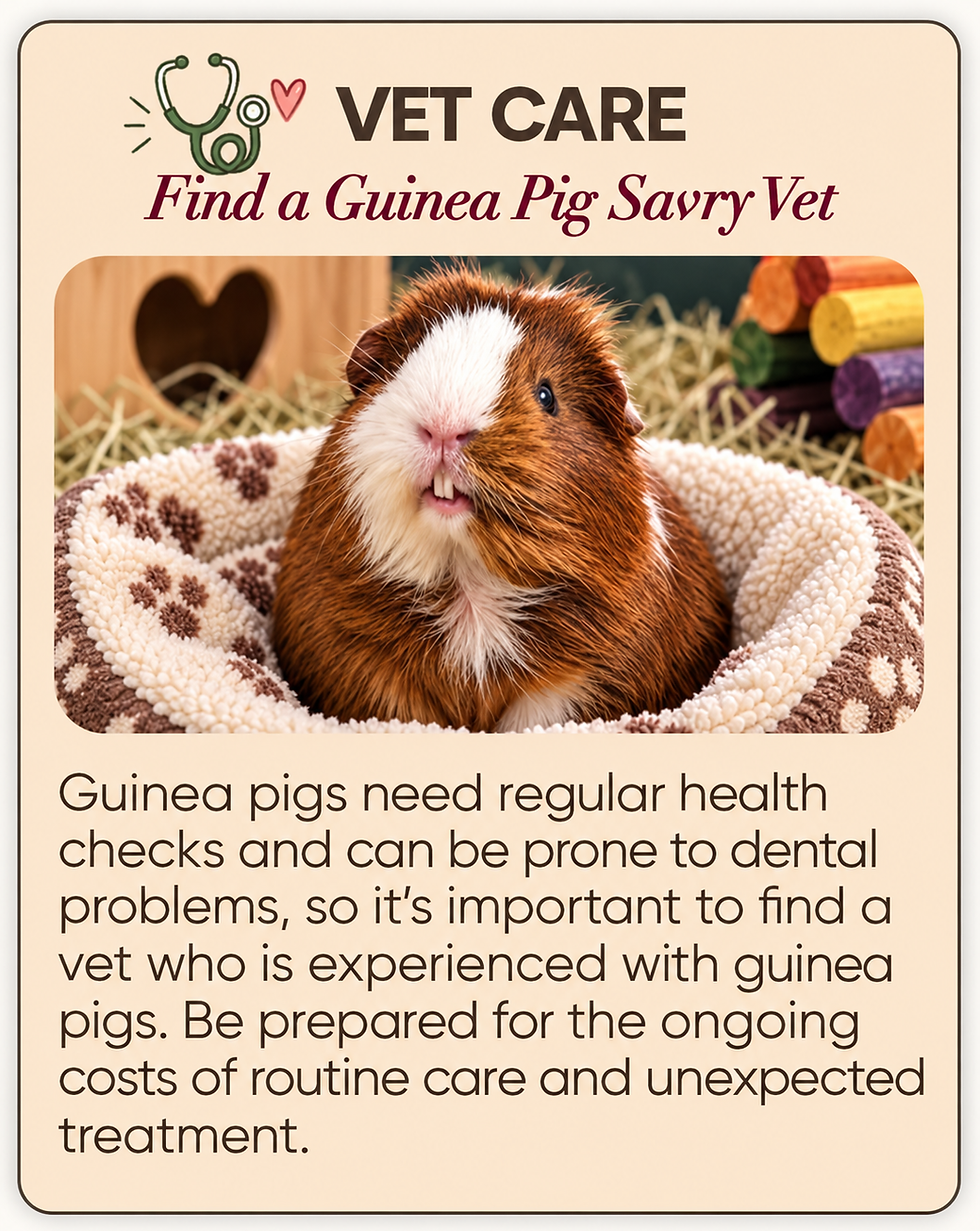
Veterinary care: Guinea pigs need regular health checks and can be prone to dental problems. Owners should find a veterinarian experienced with guinea pigs and be prepared for routine and unexpected veterinary costs.
Grooming: All guinea pigs need regular nail checks and trims. Long-haired guinea pigs may need daily brushing and extra coat care, so adopters should be prepared for the grooming needs of their chosen guinea pig.
Transport: A guinea pig sitting safely inside a pet carrier. Adopters should bring a secure, suitable pet carrier when collecting their guinea pig.
Enrichment: Guinea pigs enjoy exploring. Provide tunnels, hideys, chew toys and safe items to investigate, scatter or hide vegetables and hay to encourage natural foraging, and regularly change their enrichment.
Lifetime commitment: Guinea pigs can live for around 5 to 10 years and require long-term care, companionship, suitable housing, food, cleaning, grooming and veterinary care throughout their lives.
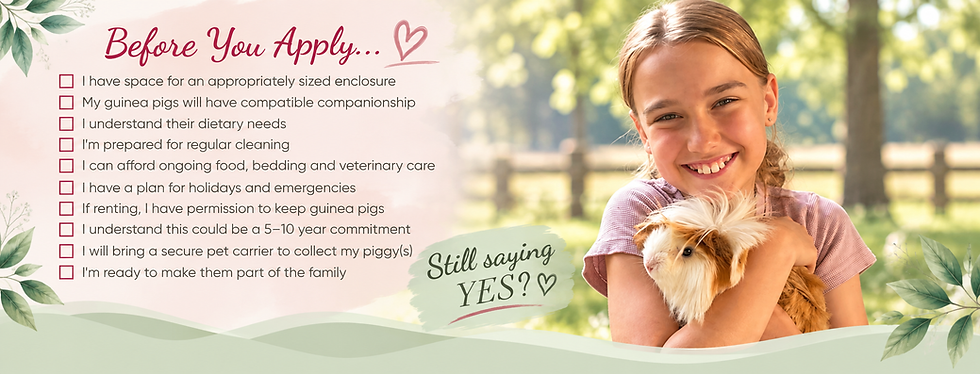
Other things to consider before adopting: Guinea pigs should not be housed with rabbits. Consider other pets such as dogs and cats. Children can help with care but an adult should be responsible. Have a plan for holidays, check rental permission if applicable, and be financially prepared for food, bedding and veterinary costs.

• Rescue • Rehabilitate • Rehome • Rescue • Rehabilitate • Rehome

bottom of page